Lando Norris Faces Mixed Reactions at the Italian GP: A Deep Dive into Team Dynamics and Fan Expectations
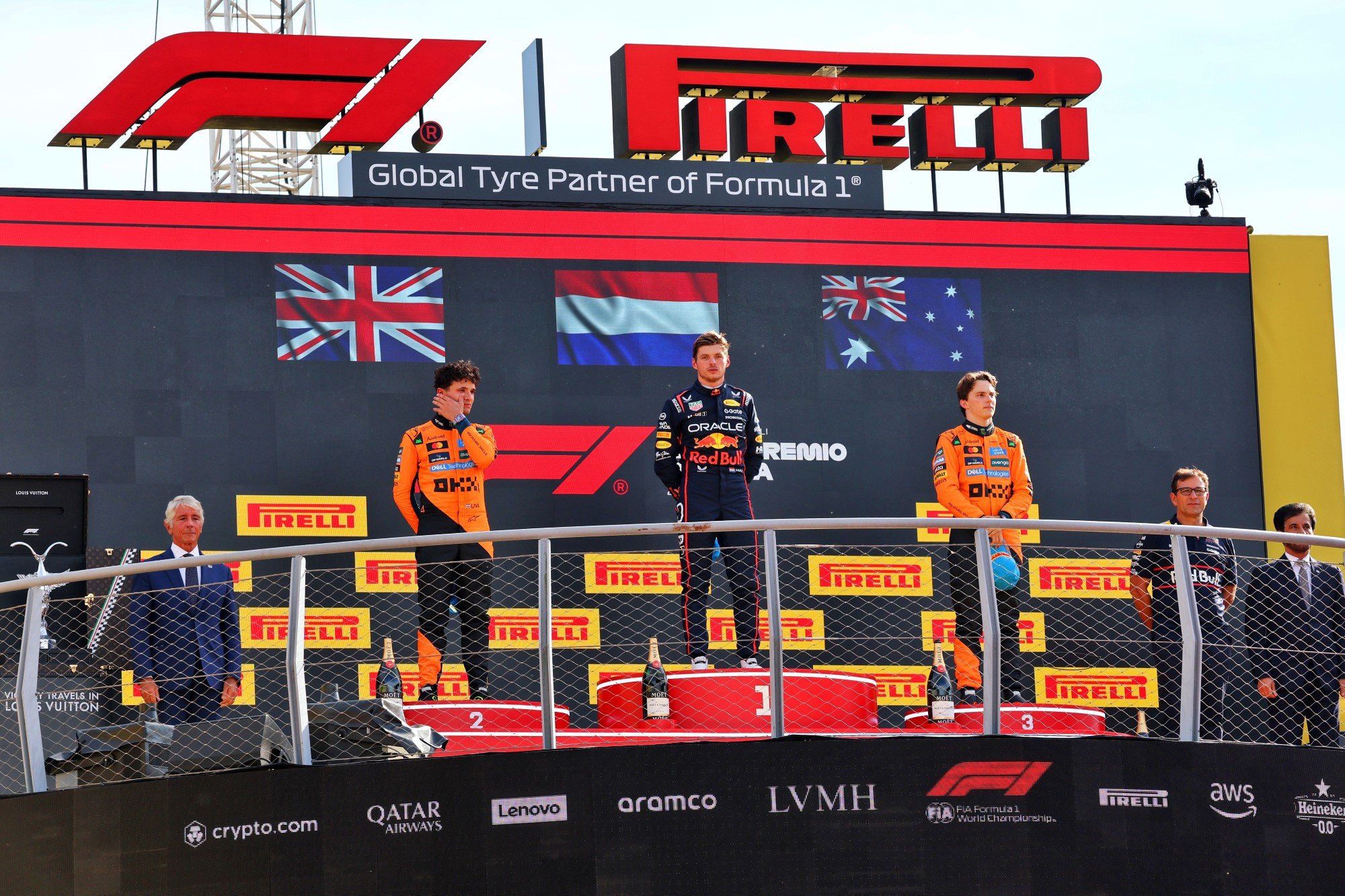
Lando Norris recently experienced a wave of mixed emotions as he stood on the podium at the Italian Grand Prix in Monza after securing a second-place finish. While many fans cheered for his achievement, a notable segment of the audience expressed their discontent through boos. This reaction has sparked discussions among racing experts and fans alike, particularly regarding team dynamics and the internal strategies employed by the McLaren team during the race.
The Context of the Race
The Italian Grand Prix is one of the most prestigious races in the Formula 1 calendar, drawing fans from around the globe to witness the high-speed action and fierce competition. At Monza, the excitement reached a fever pitch as drivers battled for position on the renowned circuit. Lando Norris, alongside his teammate Oscar Piastri, found themselves in a strategic situation that would ultimately influence their standings in the race.
During the race, a slow pit stop for Norris proved to be a crucial moment. This delay positioned him behind Piastri, leading to a series of strategic decisions that would affect both drivers’ performances. Norris had previously agreed to a team strategy that prioritized Piastri’s pit stop as a precaution against the advancing Ferrari of Charles Leclerc. However, this arrangement led to some tension as it became apparent that the team’s internal rules, often referred to informally as the ‘papaya rules,’ were at play.
Team Dynamics and ‘Papaya Rules’
Johnny Herbert, a former Formula 1 driver and FIA commissioner, weighed in on the situation, suggesting that the jeers directed at Norris were closely tied to the internal team orders enforced by McLaren. He remarked, “There was certainly some of the McLaren ‘papaya rules’ influencing the boos.” The term ‘papaya rules’ was coined in 2024, reflecting the guidelines that govern the competition between Norris and Piastri within the McLaren team.
This internal strategy raised questions about fairness and competition, especially as fans began to scrutinize the implications of such orders. The decision to allow Norris to reclaim his position after Piastri complied with the team’s directive was viewed by some as a compromise of competitive integrity. Andrea Stella, the team principal of McLaren, defended the decision, stating, “What matters is that the championship is contested within the principles and values of racing that we uphold at McLaren, which we have established with our drivers. We believe it was absolutely correct to revert to the situation prior to the pit stop and then let them race.”
Norris Responds to Criticism
In the wake of the mixed reactions from fans, Norris took the opportunity to clarify his stance regarding the so-called ‘papaya rules.’ He firmly stated, “Those rules don’t exist anymore. We never had such regulations.” When pressed about whether there is any documentation outlining team strategies, he acknowledged, “Yes, but it doesn’t even fill a page. The important thing is it says: ‘fair.’ That covers a lot—fairness for me and for Oscar. I don’t dictate how these situations unfold. We don’t dwell on the past; we do what we feel is right for us.”
Norris’s comments highlight the evolving nature of team dynamics in Formula 1, where drivers must navigate not only their on-track performances but also the complexities of team strategies and fan expectations.
Verstappen’s Dominance and Fan Reactions
Amidst the controversy surrounding Norris, Max Verstappen emerged as a focal point of admiration during the race weekend in Monza. The reigning champion showcased his driving prowess by dominating the event and reclaiming the lead within the first lap. His impressive performance drew significant applause from the crowd, contrasting sharply with the boos directed at Norris.
Herbert commented on Verstappen’s reception, noting, “I think it’s completely understandable for fans to cheer for Max. There’s a lot of respect for what he does in the cockpit. I’m also impressed when I see the laps he can achieve.” The admiration for Verstappen underscores the complexities of fan loyalty in Formula 1, where individual performances can significantly influence public perception.
Navigating Fan Expectations
The contrasting reactions to Norris and Verstappen raise important questions about the nature of fan expectations in Formula 1. Fans often hold strong opinions about team strategies and driver performances, leading to emotional responses during races. For drivers like Norris, navigating these expectations can be challenging, especially when their actions are scrutinized in the context of team decisions.
Norris’s experience at Monza serves as a reminder of the delicate balance drivers must maintain between their competitive instincts and the obligations imposed by their teams. While they strive to achieve personal success, they are also part of a collective effort that often requires compromises and strategic decisions that may not always align with fan sentiments.
The Role of Team Orders in Formula 1
Team orders are a common aspect of Formula 1, where teams often implement strategies to maximize their chances of success. These decisions can include directing one driver to allow another to pass for the sake of championship points or optimizing pit stop strategies to protect against rival teams. While such strategies can be beneficial for the team’s overall performance, they can also lead to tensions within the team and mixed reactions from fans.
The McLaren situation illustrates the complexities of team orders and their impact on driver relationships and fan perceptions. As the sport evolves, teams must navigate the fine line between fostering healthy competition among their drivers and adhering to strategies that serve the team’s best interests.
Conclusion
Lando Norris’s experience at the Italian Grand Prix highlights the intricate dynamics of Formula 1 racing, where team strategies, driver relationships, and fan expectations intersect. As the sport continues to evolve, understanding these complexities will be crucial for both teams and fans alike. The narrative surrounding Norris, Piastri, and Verstappen serves as a reminder of the challenges and triumphs faced by drivers in their pursuit of excellence on the track.
