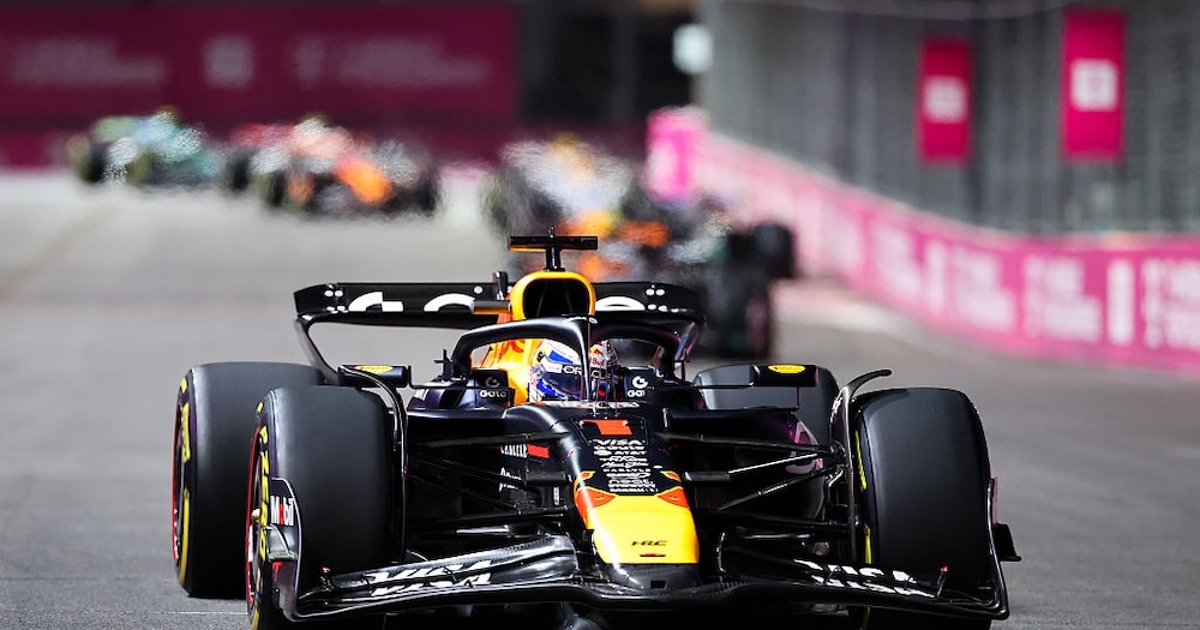
Max Verstappen’s Mastery at the Las Vegas Grand Prix: A Deep Dive
Max Verstappen’s performance in the Las Vegas Grand Prix has been a topic of much discussion, particularly regarding his remarkable skill at handling race starts. The way Verstappen navigated the first lap of the race, especially his overtaking maneuver against Lando Norris, exemplifies his racing acumen. Starting from the second position, Verstappen faced a formidable challenge as Norris fiercely defended his inside line. However, the Dutch driver capitalized on Norris’s momentary mistake, allowing him to slip past and gain a crucial advantage.
Verstappen’s Brilliant Start
The first lap of a race is often seen as one of the most critical phases, and Verstappen has consistently demonstrated his ability to excel during this time. Team principal Laurent Mekies praised Verstappen’s approach to race starts, noting that he rarely makes mistakes in these crucial moments. According to Mekies, Verstappen executed his strategy flawlessly, making a decisive move that set the tone for the rest of the race.
Norris, who initially held the lead, pushed hard to maintain his position but ultimately overcooked it, allowing Verstappen to seize the opportunity. Mekies remarked on the typical nature of Verstappen’s performance, highlighting that the Dutch driver is known for his ability to capitalize on such openings. This skill not only demonstrates Verstappen’s racing intelligence but also underscores the competitive spirit that drives him.
Early Race Dynamics
Following the spectacular start, the early phase of the race presented its own challenges. George Russell, driving for Mercedes, applied unexpected pressure on the Red Bull team. Mekies commented on how Russell was able to maintain a significant challenge for about five to ten laps, which was somewhat surprising given the typical dynamics of the race. However, as the race progressed, Russell began to lose his pace, possibly due to tire degradation or other factors.
As the situation stabilized, Verstappen found himself in a more controlled position. Mekies noted that once Russell fell slightly out of the DRS (Drag Reduction System) zone, Verstappen could focus on managing his pace and maintaining his lead. The strategic decision to stay out and not cover Russell during his pit stop proved vital. It allowed Verstappen to continue pushing and effectively match Russell’s pace, keeping him in contention as the race unfolded.
The Importance of Tire Strategy
Tire management is a crucial element in Formula 1, and the Las Vegas Grand Prix was no exception. The timing of pit stops and the choice of tire compounds can significantly affect race outcomes. Mekies explained the complexities involved in deciding when to pit, especially when considering the performance of the tires and the potential speed of competitors on fresh rubber.
The Red Bull team ultimately decided to stay out longer than Russell, a choice that required a degree of risk assessment regarding tire performance. When Verstappen eventually pitted, the gap between him and Russell remained minimal, illustrating the effectiveness of their strategy. Mekies expressed confidence in the tire choice, noting that the medium tires showed good condition when they were swapped out, which allowed Verstappen to maintain a competitive edge on the hard tires.
Verstappen’s Pace in the Second Stint
As the race transitioned into the second stint, it became evident that Verstappen had the pace to pull away from his competitors. Mekies highlighted that Verstappen was able to increase his pace whenever necessary, especially when Lando Norris began to apply pressure. This adaptability is a hallmark of Verstappen’s driving style, demonstrating his ability to respond to challenges effectively.
Mekies observed that even when the race became more predictable, Verstappen’s performance remained consistently strong. The team had a good read on the tire conditions and Verstappen’s comfort level, which allowed him to push harder and extract more performance from the car. Mekies remarked that there were moments during the second stint where Verstappen was asked to increase his pace, and he responded positively each time, showcasing his determination and skill.
Navigating Uncertainty in Las Vegas
The unique circumstances surrounding the Las Vegas Grand Prix added another layer of complexity to the race weekend. With practice sessions disrupted by various factors, teams faced uncertainties that could easily derail their strategies. However, Verstappen’s ability to adapt to these challenges was commendable. Mekies referred to the weekend as a "masterclass" in racing for Verstappen, emphasizing the obstacles that were present.
The lack of adequate preparation time for the teams meant that many aspects of race execution were not fully understood. Mekies praised Verstappen for his performance, acknowledging the tire degradation, race pace, and overall execution. It was a testament to Verstappen’s talent and the hard work of the entire Red Bull team based in Milton Keynes.
Conclusion: A Display of Racing Excellence
In summary, Max Verstappen’s victory at the Las Vegas Grand Prix was not just a result of luck or chance; it was a culmination of strategic thinking, impeccable timing, and a deep understanding of racing dynamics. His ability to capitalize on opportunities, manage tire performance, and respond to competition underscores why he is a formidable presence in Formula 1.
The praise from Laurent Mekies highlights the intricacies of racing at this elite level, where every detail counts and the margin for error is razor-thin. Verstappen’s performance serves as a reminder of the skill and dedication required to succeed in this high-stakes environment, reinforcing his status as one of the top drivers in the sport today.
